Building Bridges
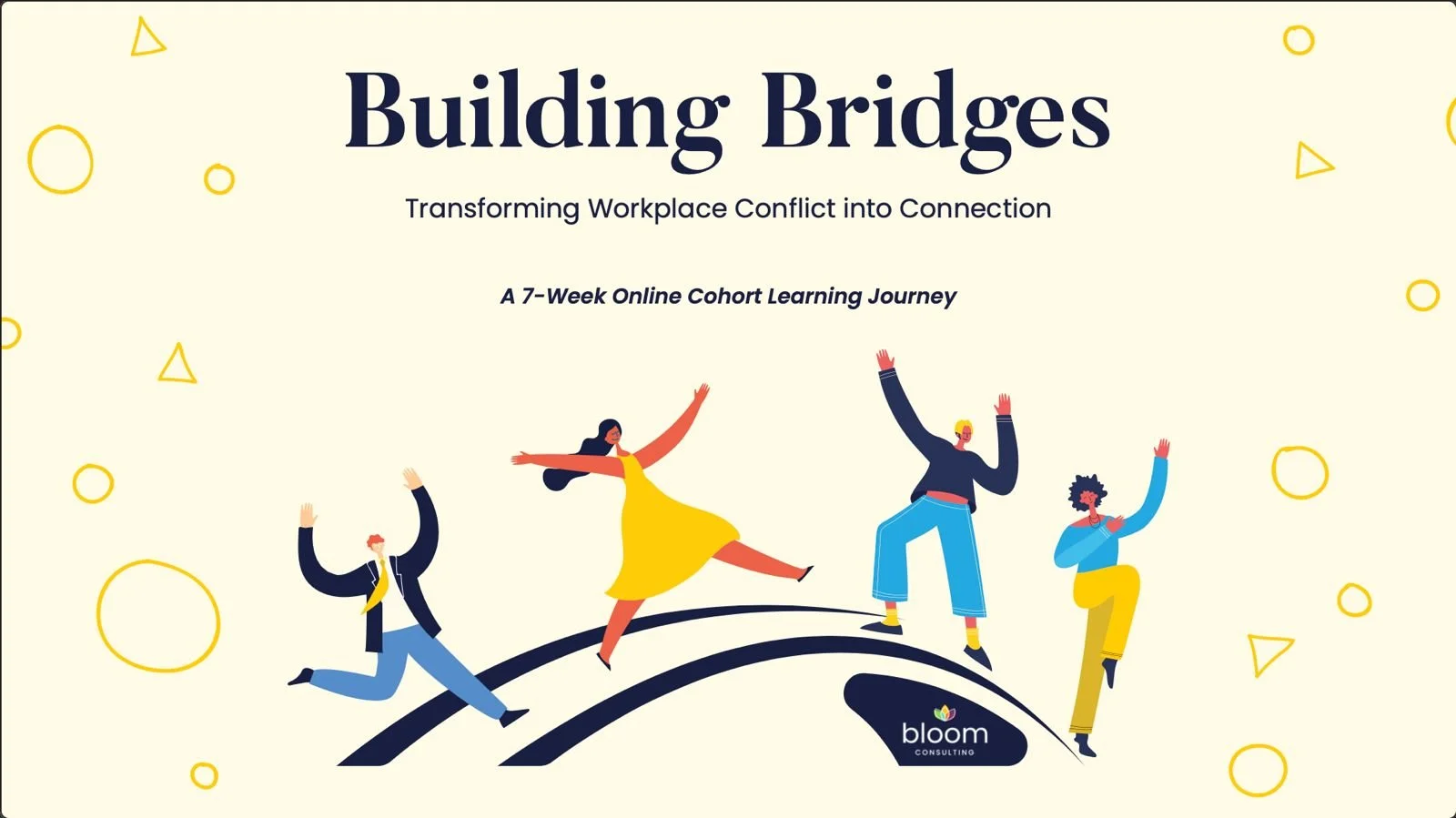
Transforming Workplace Conflict into Connection
a cohort-based learning journey

“Conflict is the spirit of the relationship asking itself to deepen.” ~ Sobonfu Somé
What is the Building Bridges Cohort?
The Building Bridges Cohort is an experiential learning program that supports individuals and teams to develop the mindsets, skill sets, and structures for bridge-building dialogue - transforming workplace conflict from division and breakdown into connection and breakthrough.
Building Bridges was a phenomenally facilitated space, and made learning about conflict resolution strategies joyous and deeply enriching. After participating in this cohort, I feel confident in implementing the tools I gathered.
~ Segen Mehreteab (former cohort participant)
Conflict is a natural and inevitable part of human relationships, woven into our cultures, teams, and organizations. Yet in many workplaces, it remains taboo, misunderstood, and difficult to address. When tensions are avoided rather than engaged, trust erodes, communication becomes guarded, and unresolved issues often surface as sudden eruptions, adversarial investigations, and fractured team dynamics. The impact is substantial: increased absenteeism, stress-related leave, burnout, disengagement, us/them dynamics, and rapid turnover. While conflict is inevitable, most workplaces have not developed the capacities needed to engage it constructively.

We believe that great workplaces and organizations are not defined by the absence of conflict, but by their capacity to navigate it with skill, courage, and care. When approached generatively, conflict becomes more than a problem to solve, it becomes a portal to stronger relationships, healing, innovation, improved decision-making, and collective wisdom. Rather than dividing us, it can allow us to bring more of our authentic selves to work, deepen our capacity to work across difference, foster more resilient, higher-performing teams, and catalyze transformation that ripples outward into our teams, organizations, communities, and the wider systems we are part of. By developing both the skills to navigate conflict, and the practices and structures that address tension before it escalates, we create workplaces that are healthier, wiser, and better equipped to thrive in complexity.
This is why we’re hosting the Building Bridges Cohort: to help you transform the way you approach workplace conflict by developing the mindsets, skillsets, and structures needed to navigate it with confidence, curiosity, and care.
From reactive —> proactive.
From division —> connection.
From breakdown —> breakthrough.

This cohort is for you if you are looking to:
Navigate workplace conflict with greater skill, confidence, courage, and compassion
Move beyond conflict avoidance and cycles of blame, shame, defensiveness, and reactivity
Deepen your capacity for empathetic listening, authentic expression, and meaningful dialogue
Build bridges across difference by staying connected - even when you disagree
Learn processes for co-creating solutions that honour the needs, experiences, and perspectives of those involved
Develop proactive practices and structures that foster healthier, more restorative workplace cultures—where conflict is seen as a teacher, relationships are valued, and psychological safety, accountability, and trust can grow
Strengthen your organization’s capacity to become more conflict-skilled and relationally healthy
Develop healthier, more constructive approaches to giving and receiving feedback
Learn through an experiential and reflective pedagogy that blends theory, role-play, practice, and personal inquiry
Grow alongside peers in an interactive, cameras-on, supportive cohort experience

The course really helped me grapple with and see my own discomfort with conflict and gently build awareness and skills navigating it, and gain an embodied sense of what it means that conflict is the spirit of the relationship asking itself to deepen.
~ Esther Maloney (former cohort participant)
✅ 8 live interactive sessions x 2.5h
✅ Slide deck of each session & session recordings
✅ Conflict transformation tools, models, & other learning resources
✅ Community of practice
✅ Weekly reflective practices to integrate learning
✅ Optional conflict coaching sessions for an additional fee
Meet the Facilitators


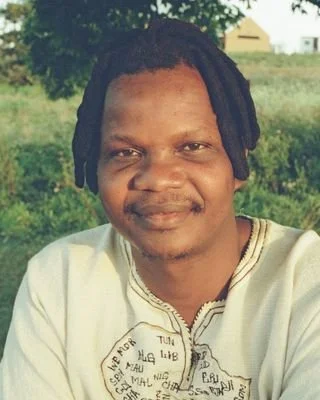
The Building Bridges cohort is guided by three facilitators whose diverse lived experiences and approaches make this offering uniquely holistic, embodied, and transformative. Rehana Tejpar draws on deep somatic and creative practices to cultivate compassion, understanding, and equity within groups navigating complex tensions. Jeff Carolin integrates his background in criminal defence law, restorative justice, and participatory learning to support authentic accountability and workplace transformation rooted in embodied connection and mindful reflection. Moyo Mutamba offers decades of peacebuilding through music, storytelling, therapy, and conflict mediation, grounding his work in the African philosophy of Ubuntu – “I am because we are” – which builds collective capacity for navigating conflict with clarity, courage, and compassion. Together, they create a learning journey that weaves body, heart, creativity, wisdom and systemic insight to deepen each participant’s ability to better navigate conflict in their professional and personal lives.
-
Rehana Tejpar, Q.MED is a facilitator, conflict mediator, leadership coach, and somatic practitioner who partners with leaders and organizations to transform conflict, unlock collective intelligence, and cultivate values-aligned, adaptive cultures. Born into an intercultural home with an East African Indian Muslim father and a Uruguayan Christian mother, Rehana brings a lived understanding of difference and a deep belief that conflict, when held with skill and care, can become a pathway to connection, collective wisdom, and transformation.
For over 20 years, she has accompanied hundreds of leaders and teams through complexity and change, supporting them to strengthen relationships, navigate difference, and step into their authentic leadership. As a dancer and somatic practitioner, Rehana weaves body wisdom, creativity, and play into her work, recognizing that lasting change requires not only new ways of thinking, but new ways of being.
-
Moyo Mutamba is a peacebuilder, therapist, mediator, and artist whose decades of community work span education, human rights, arts, and agriculture in complex political and institutional contexts. His commitment to healing and conflict transformation led him to social work and therapy, supporting diverse communities in navigating harm and building resilience. As a Qualified Mediator (Q.Med), conflict coach, and facilitator, Moyo’s practice and philosophy are deeply rooted in the African principle of Ubuntu – “I am because we are.” He weaves music, storytelling, and embodied practices to help individuals and teams cultivate clarity, compassion, and collective capacity for navigating conflict. His work is grounded in the belief that meaningful equity and inclusion require courageous conflict transformation.
-
Jeff Carolin is a facilitator, qualified mediator, and former criminal defence lawyer who brings over a decade of frontline experience advocating for marginalized people within punitive systems. His journey into restorative and transformative justice arose by witnessing the layers of harm created by traditional approaches to conflict, leading him to support healing-centred practices in workplaces. Jeff’s facilitation draws on embodied nonviolent communication, vulnerability, and reflective co-learning. He specializes in organizational culture change, restorative accountability for men who have caused harm, and cultivating embodied awareness of emotions like anger to transform how individuals and teams relate to conflict.
More About Each Facilitator:
There is no one I trust more to support conflict navigation than Bloom! Alone and together they have a uniquely joyful and kind approach - offering grounding, deep listening and gentle but insightful and challenging (in a good way) questions that can rupture old unhelpful patterns and invite genuine repair. If you're craving deep learning, reflection and personal growth, this is the space for you.
Roxy Cohen (former cohort participant) ~

Dates & Schedule
Start Date | Jan 27, 2027
End Date | March 17, 2027
Bi-weeklySessions | Wednesdays, 12–2:30pm ET

I had a challenging personal conflict in my workplace during this time and because of the tools shared in this course, and the peer-to-peer mentoring I received and a coaching call with one of the facilitators, the outcome was better than I could have imagined and far better than I would have done on my own.
Arlene Slocombe (former cohort participant) ~

Tuition & How to Join
To make participation accessible, we use a sliding scale model for tuition. This allows participants to choose a contribution that reflects their financial situation, ensuring that resources are not a barrier to joining. Together, we cultivate a diverse, supportive community where everyone can grow, share, and create impact.
True Cost | $1050
Accessibility | $900
Solidarity | $750
Refund and Transfer Policy
Given the time & energy we invest in this program, and the way in which incoming revenue informs our planning process, please find below our refund and transfer policy:
Program fees are non-refundable.
If you cannot participate, you may be able to transfer your registration to a different participant, and we may be able to help you find another participant.
If we need to cancel a session (due to unforeseen circumstances), we will do our best to reschedule for a later date. If you are unable to attend on the rescheduled date, or if we are not able to reschedule the session, then you will have the option to be partially refunded.

Overview of Sessions
-
In this first session, we will collectively build our container for connection, psychological safety and co-learning, and will set personal learning intentions for the cohort journey. We will also begin laying the foundations for bridge-building dialogue by introducing foundational principles, reflecting on our personal experiences of workplace conflict, and engaging in some light practice.
-
This session offers a deep dive into how our nervous systems react to conflict. We will compassionately reflect on our bodies’ stress reactions in conflict, such as ‘attacking other’, ‘attacking self’, withdrawing, avoiding, and appeasing. We will focus on how we know when we’re in these reactions, what dynamics & patterns tend to bring them on, what’s good about them, where they come from, how they inhibit us from showing up well in bridge-building, and what strategies for nervous system co-regulation support us to attune and ground when triggers occur.
-
“The first duty of love is to listen” – Paul Tillich. Listening is something that we’re engaged in all the time, but the skill of listening compassionately, and with empathy, when conflict and disconnection is arising between us can be immensely difficult. Our instincts may be to defend, deny, respond, fix, and judge, but these responses will only deepen the divide. A foundational skill for bridge-building dialogue, therefore, is learning how to listen differently, especially when our nervous systems are activated. In this session, through practice, we will build our reflective listening skills, while continuing to deepen our nervous system self-awareness.
-
In this session, we shift over to the other half of bridge-building dialogue: empathetic speaking. This way of speaking again invites us to pay attention to our nervous systems – and to slow down and connect with our hearts before sharing our perspective with the other person. When we slow down, turn inwards and acknowledge the sensations & feelings that are present, we gain more insight into how and why we’re feeling impacted – specifically, what core needs, values, goals, and aspects of our identities are feeling undermined – as well as what interpretations of the other person’s intentions – and previous life experiences – may be driving our reactions. We can then speak to this in ways that are less likely to elicit defensiveness, and are more likely to invite connection.
-
Empathetic listening & empathetic speaking are the central components of bridge-building dialogue, as together they create the possibility for mutual understanding to arise regarding each person’s perspective. But how do we move forward once we better understand each other? And how do we get into these heart-centered conversations in the first place? In this session, we’ll look at the role that containers & consent play when it comes to initiating dialogue, and practice brainstorming mutually-beneficial strategies & agreements as we move out of dialogue.
-
Difference & power are present in every interpersonal relationship. Positional power and social identity differences (such as those based on race, gender, sexual orientation, ability, religion, ethnicity, etc.) frequently arise as themes in organizational conflicts, but they actually intersect with so many other forms of power that are often overlooked: psychological power, personality power, language and speaking ability, and many others. Also, people may hold power based on role and identities, but still feel powerless – and vice versa. In this session, we’ll integrate all these aspects of power & difference into the dialogue skills we’ve been building in the previous sessions.
-
In this session we zoom out and reflect on how our efforts of bridge-building dialogue can either be supported – or undermined – by the broader organizational cultures & structures in which they are situated. We’ll examine the typical ‘punitive’ approach that governs most organizational conflict policies & practices and compare it to a restorative workplace model: one where we’re proactively centring relational health & leadership and integrating bridge-building dialogue mindsets & skillsets before conflict arises.
Note: the term ‘restorative workplace’ comes originally from the term ‘restorative justice’, which is a non-adversarial approach for responding to harm & violence that grounds accountability in healing, repair, & transformation, rather than punishment. While the origins and use of these practices are contested to some degree, they have been inspired in this part of the world by Indigenous nations on Turtle Island and Aotearoa (New Zealand), as well as by religious faith communities.
-
In the final session, participants will identify where they hold agency and influence within their organizational systems and, through small group coaching, they will explore areas of possibility and stuckness, and reflect on how to apply the tools and insights from the program. The session will support participants in integrating their learning and stepping into their roles as contributors to restorative and resilient workplace cultures.
-
For an additional fee, participants have access to individual conflict coaching with the facilitators, a personalized space to deepen learning, explore challenges, and integrate conflict transformation tools into their specific organizational contexts.

FAQs
-
Not at all. Some people will come with a clear workplace challenge, others just want to grow their skills and confidence. The practices, tools, and reflections will meet you wherever you’re at.
-
We know life happens. You’ll get the recordings, slides, and resources so you won’t fall behind. That said, being there live gives you the richest experience — especially the small-group practices.
-
Both. You’ll deepen your own awareness and skills, while also learning tools you can bring back to your team or organization. Think of it as growing from the inside out. Both individuals and teams are welcome to join.
-
This is an interactive, cameras-on cohort — you’ll be invited into dialogue and practice with others. That said, you’re always in charge of how much you share. We create a space where you can stretch at your own pace.
-
Session resources and reflective practices are included in the cohort and you can choose optional one-on-one or small group coaching/mediation with the facilitators for an additional fee. Plus, you’ll be part of a community that continues to support each other as the journey unfolds.
-
Everyone is welcome. Whether you’re just starting out or already have some experience, this cohort is designed to meet you where you are. You’ll be supported and encouraged to stretch into the next stage of your conflict skills, at a pace that feels right for you.
If you have any other questions feel free to reach out to us - info@bloomworld.org