
by Moyo Mutamba
We rarely choose to enter into conflict. More often, it arrives uninvited, disrupting our sense of stability and plunging us into intense discomfort. Whether it manifests as a sharp disagreement in a meeting, a lingering tension between colleagues, or a subtle shift in a personal relationship, conflict leaves something deeply unsettled within us. Left unaddressed, it hardens our hearts, colors how we perceive others, and tempts us to question whether trust, connection, or genuine collaboration remains possible.
In my work as a mediator and conflict coach, as well as in my own life, I frequently witness people default to indirect strategies when tension arises. We hesitate, change the subject, minimize our hurt, or step away entirely. In popular conversation, this behavior is usually labeled simply as "conflict avoidance." However, labelling it as such fails to capture what is truly happening. There is a more complex dynamic occurring beneath the surface than simply running away from a problem.
When interpersonal tensions emerge, people process them in remarkably diverse ways. Some seek solace in solitude to sort through their feelings; others reach out to trusted peers, friends, partners, or community networks to debrief and find emotional grounding. These actions are not attempts to evade reality. Rather, they are intuitive strategies to process impact, regain equilibrium, and ensure basic needs — such as safety, dignity, and understanding – are met.
What this pattern actually highlights is not a lack of courage, but a profound recognition of how taxing direct engagement can be. Engaging directly with conflict requires a high degree of emotional regulation and vulnerability, and most of us simply have not been equipped with the tools or environment necessary to approach it with assurance.
To understand why direct resolution feels so daunting, we must examine the substantial internal barriers and fears that surface whenever we consider speaking up. Facing conflict asks us to navigate three significant psychological hurdles:
1. The tension of unmet needs: Direct dialogue requires us to extend patience, curiosity, and active listening to another person, even while our own deep longing to be heard, validated, and understood remains unmet. Holding space for another's perspective while carrying our own unaddressed hurt demands immense self-discipline and emotional stamina.
2. The intrapersonal mirror: True repair demands honest self-reflection. Before we can even initiate a constructive conversation, we must look inward and examine our own contributions, biases, and reactive patterns. Confronting the parts of ourselves that are imperfect or fallible frequently triggers internal shame, harsh self-judgment, and defensiveness. It is uncomfortable to sit with the realization that we, too, may have caused harm.
3. The vulnerability of expression: Finally, the act of speaking our truth carries real risk. We worry about choosing the wrong words, losing emotional control, appearing overly aggressive or weak, or compounding the existing damage. Underneath it all lies a persistent fear of rejection, punishment, or permanent relational rupture if the dialogue goes poorly.
Faced with these daunting internal pressures, silence and withdrawal can feel like the safest, most self-protective choices available. When we doubt our capacity to navigate the heat of a difficult exchange, we naturally begin to second-guess our instincts. We question whether the issue is "worth bringing up," convince ourselves that nothing will change anyway, and catastrophize the potential outcome. What appears on the surface to be conflict avoidance is, at its root, a lack of conflict confidence.
The path past silence does not negate the real feeling of discomfort or suppressing fear. Instead, it requires cultivating conflict confidence—the grounded self-awareness, emotional resilience, and practical communication skills needed to navigate disagreement with clarity, courage, and compassion.
Conflict confidence is built when our internal mindsets and external skillsets align. Mindset provides the foundation: viewing conflict not as a battle to be won or an error to be erased, but as a signal pointing toward unmet needs, misaligned expectations, or outdated ways of relating. Skillset provides the bridge: learning how to listen beneath defensive positions, regulate our nervous systems during tension, articulate impact without hostility, and co-create ways forward rooted in mutual respect.
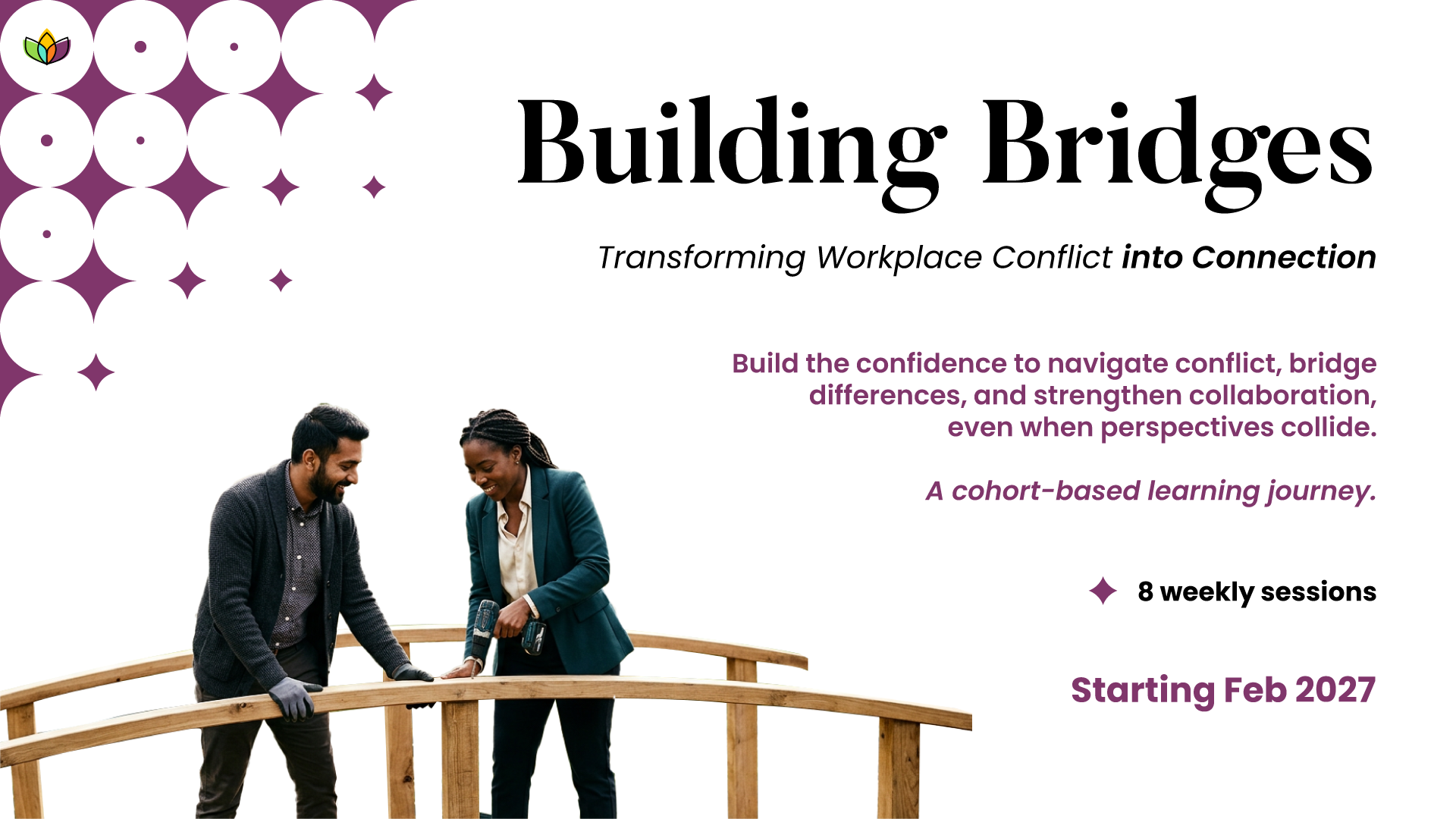
The Building Bridges Cohort offers a supportive, experiential learning space explicitly designed for developing this vital confidence. Rather than treating conflict strictly as a transactional problem to be managed, the cohort invites participants to explore restorative and transformative practices that honor our shared humanity. Together, we delve into practical strategies for engaging difficult conversations, understanding the wisdom beneath our reactions, practicing accountability without shame, and rebuilding broken trust. Building Bridges grows our collective capacity to remain present, empathetic, and grounded with one another—even in the presence of difference, pain, and disagreement. Sign up here to join the cohort.
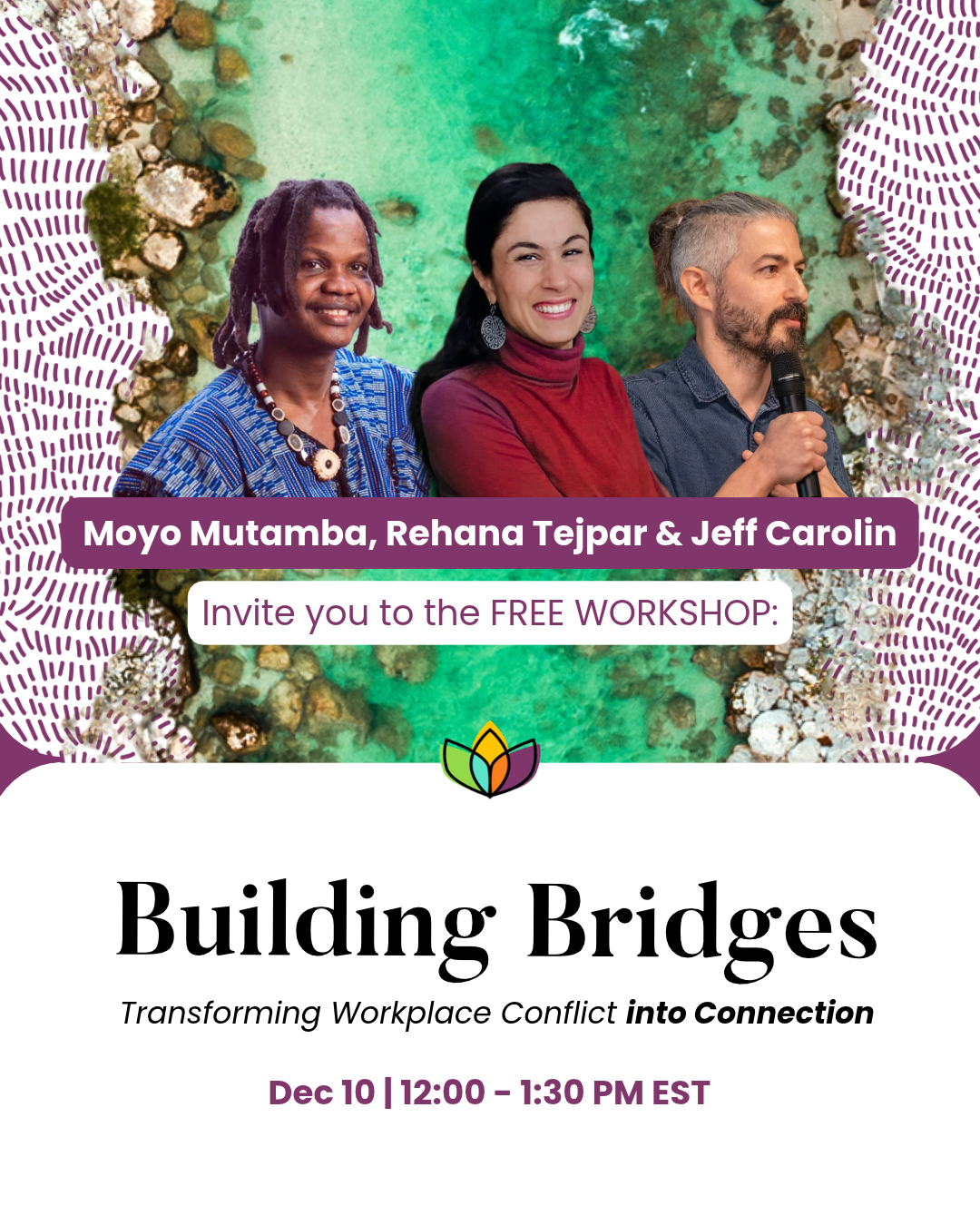
If you want to get a taste of what the cohort will be like, we will be offering a free workshop on Dec 10.
You can learn more and register here.